A Slow Stay
High Atlas, Morocco
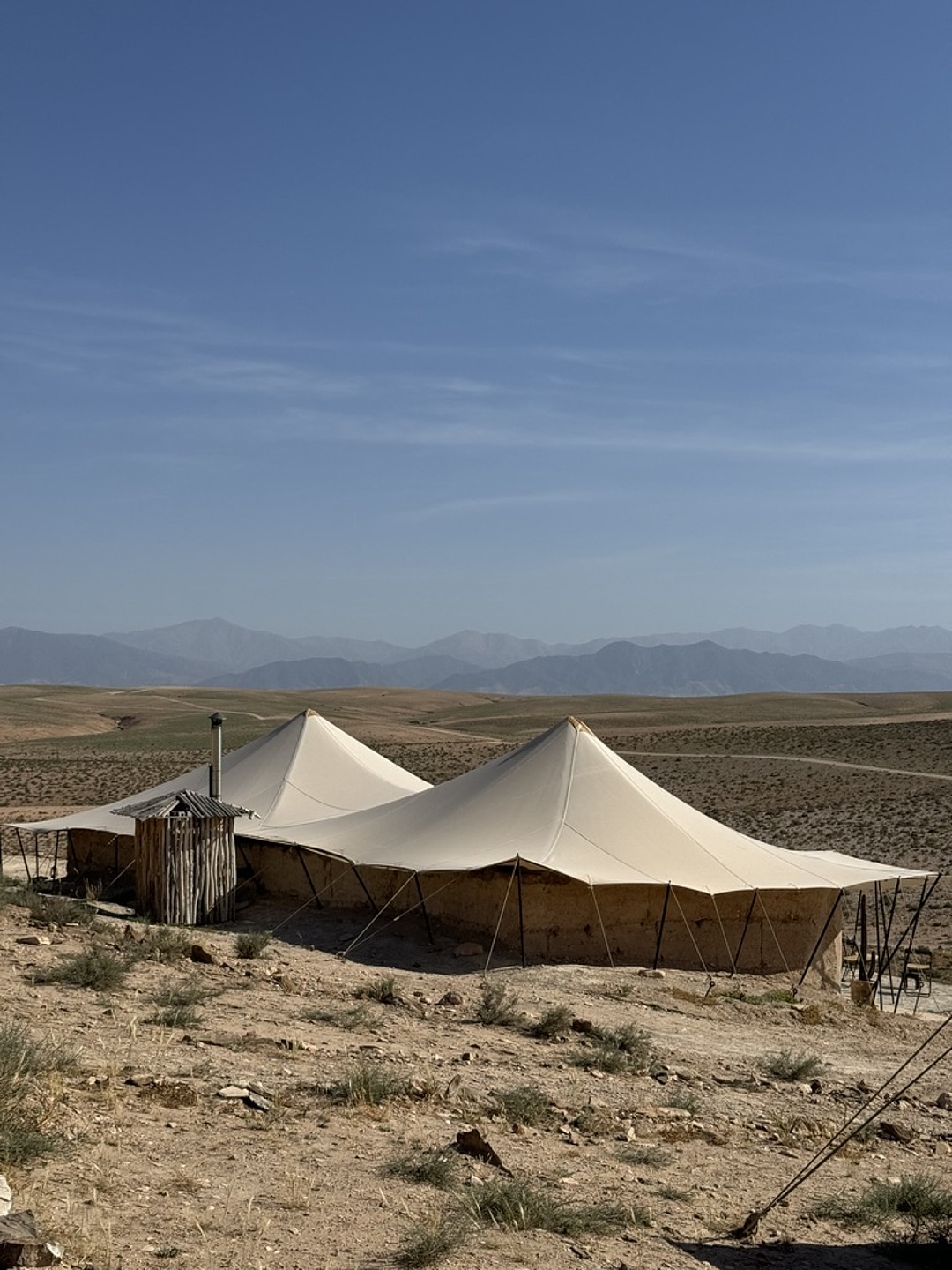
Scarabeo Camp sits on a plateau in the High Atlas Mountains two hours south of Marrakech, at an altitude of 1800 metres where the air is clear and the silence is total. The camp consists of a handful of Berber-inspired tents arranged across a bare, beautiful landscape of dusty plains, distant peaks and enormous sky. There are no fences, no boundaries, no sound beyond the wind. At night, the stars are overwhelming.
This is not a hotel that competes with the landscape. It steps back from it. The tents are simple and comfortable — proper beds, good linen, wood-burning stoves — but the experience is defined by what is outside the tent flap rather than inside it. Sunrises here are the kind that reset something in you. The Atlas at first light, the mist in the valleys, the complete absence of noise from the modern world — Scarabeo delivers what very few places can: the feeling of being genuinely, properly away.
Eight canvas tents, each one raised on a low stone plinth and oriented towards the mountains. Inside: a proper double bed, Moroccan textiles, a wood-burning stove that the camp staff light before you return from dinner, lanterns and candles. There is hot water, there are real mattresses and real pillows. The experience is genuinely off-grid but the comforts are real. Falling asleep to the sound of the Atlas wind and nothing else is something you will remember.
A communal tent where meals are shared around a long table — slow-cooked tagines, freshly baked bread, salads from the kitchen garden, preserved lemons and olives. The cooking is simple Moroccan, made with care and eaten without hurry. Dinner here, by candlelight with the mountains dark outside and the fire going, is one of the most atmospheric meals you will have anywhere. There is no menu and no choice — you eat what is cooked, and what is cooked is always right.
At 1800 metres, with no light pollution for thirty kilometres in any direction, the night sky at Scarabeo is extraordinary. The camp provides blankets, cushions and guides who know what they are looking at. Lying on your back in the silence of the Atlas plateau watching the Milky Way move overhead is one of those experiences that is genuinely difficult to put into words. Plan your stay around a new moon if you can.
Set an alarm. The first light over the Atlas at Scarabeo turns the plateau from black to copper to gold in the space of twenty minutes, and the mountains to the south emerge from the dark one by one. There is usually mist in the lower valleys. The camp serves mint tea and Moroccan pastries as the sun comes up. Nothing you read here does it justice. Set the alarm.
Walking distance
The plateau is dotted with small Berber villages connected by ancient mule tracks. The camp can arrange guided walks through the surrounding landscape, stopping at villages where life has changed slowly over centuries — the same crops, the same architecture, the same rhythms. It is one of those rare encounters with a way of life that feels neither performative nor intrusive, just honest. Bring something small to give to the children.
2-hour drive
The sensory contrast between Scarabeo and Marrakech is part of the point. After a day or two of Atlas silence, the medina hits differently — louder, brighter, more overwhelming but also more vivid. Jemaa el-Fna in the evening, the souks in the morning, lunch at a riad in the Mellah. Use Marrakech as your entry and exit point, bookending the silence of the camp with its noise, and you will experience both more fully.
3-hour drive
The UNESCO-listed ksar south of the Atlas, a fortified village of mud brick towers that has been here since the twelfth century and has featured in more films than you would think. Go in the early morning, cross the river on foot, climb to the top. The landscape around it — the Draa Valley, the first dunes of the Sahara to the south — rewards a full day. The drive back through the Tizi n'Tichka pass as the sun sets is one of the great Moroccan journeys.