Pays Basque

A Slow Guide

Pays Basque

Atlantic light, red-shutter villages & the coast that refuses to be ordinary

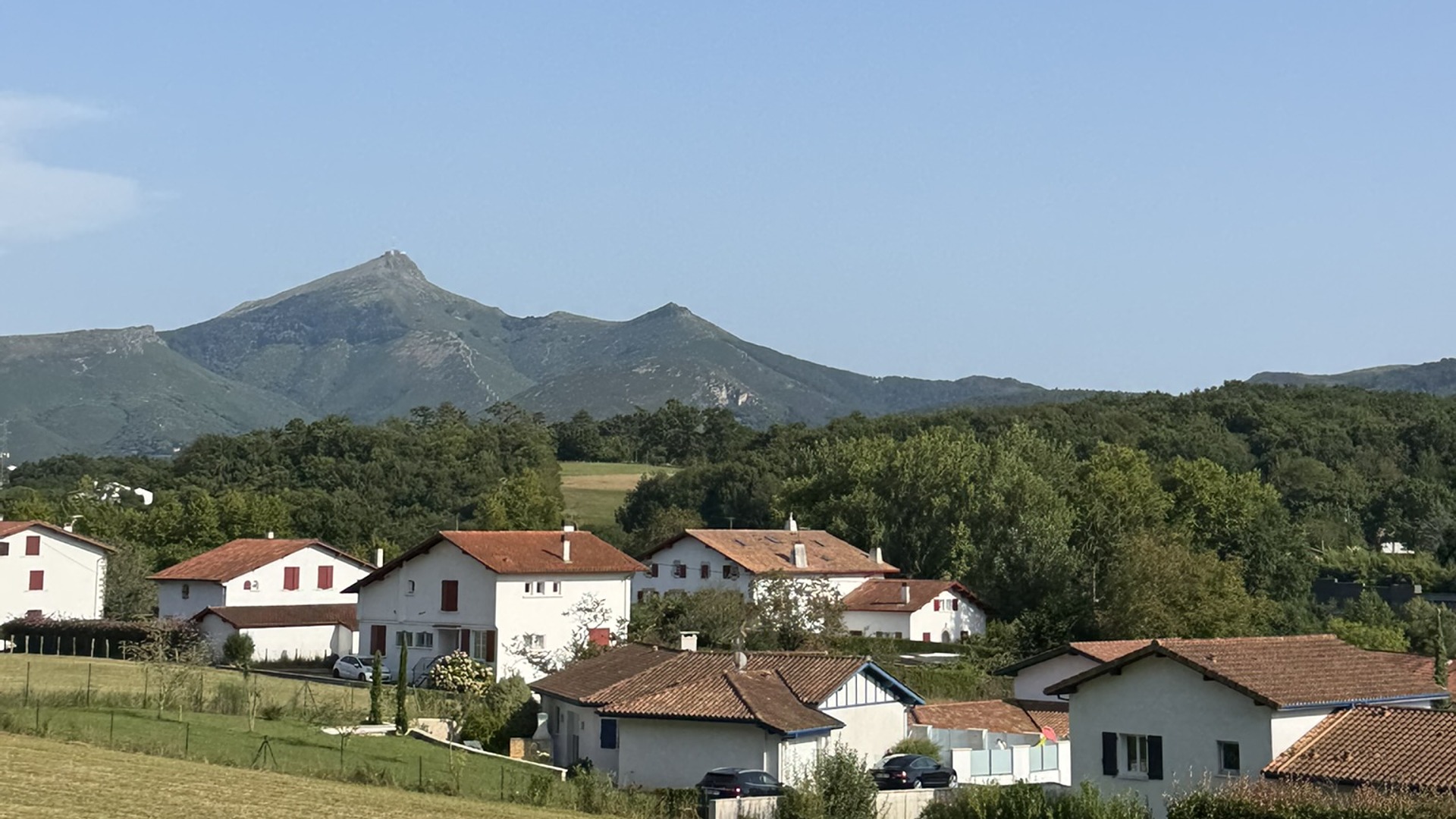
The French Basque Coast exists on its own terms. It is not quite French and not quite Spanish, shaped by an ancient culture that predates either border and still very much present in the language on the shop signs, the architecture of the farmhouses and the particular pride people take in the food on the table. The Pyrenees arrive at the sea here, and the effect on the landscape is dramatic: a coast of cliffs and surf-battered bays, the mountains visible from the beach on a clear morning, the light doing things to the water that belong to the Atlantic and nowhere else.

Biarritz gets most of the attention, and it earns some of it. But the best of the Basque Coast is found in the smaller places — Guéthary with its village square above the surf, Saint-Jean-de-Luz with its perfect bay and its market, Bidart on the cliff between the two. This is a coast for slow days: a morning at the market, an afternoon in the water, an evening eating well at a table that does not need to be booked weeks in advance. It rewards the unhurried visitor more than almost anywhere in France.

Guéthary

Between Biarritz and Saint-Jean-de-Luz

The most beautiful village on the coast, and among the most beautiful in France. A single main street of red-shuttered Basque houses descending to a small harbour, a village square with a fronton wall for pelota, and a cliff-top promenade above one of the finest surf breaks on the Basque Coast. The break at Guéthary is a big-wave spot by French standards — on the right swell, the waves out at Avalanche are extraordinary to watch, even from the cliff. Stay if you can; the village is almost impossibly good in the evening when the visitors have gone.

Biarritz

The surf capital

Biarritz built its reputation as a 19th-century resort for European royalty, reinvented itself as the birthplace of French surfing in the 1950s, and somehow managed to keep both identities intact. The Grand Plage is one of the great urban beaches — a wide arc of sand below the casino and the grand hotels, the Atlantic rolling in all year round. Walk out to the Rocher de la Vierge at sunset, visit the covered market in the morning, and eat as well as you can in the evening. The city has real quality and it knows it, without ever quite becoming smug about it.

Saint-Jean-de-Luz

The most perfect bay

The most beautiful bay on the coast — a near-perfect crescent of calm water protected from the Atlantic swell by two long jetties, the town stacked behind it in the distinctive Basque palette of white render and dark red timber. Louis XIV married Maria Theresa of Spain here in 1660, and the town has been quietly pleased about this ever since. The market on Tuesday and Friday mornings is one of the best in the south-west of France. Walk the harbour front in the late afternoon and find somewhere to eat that evening. It is an extremely good place to be.

Bidart

The village on the cliff

Smaller and quieter than its neighbours, Bidart sits on a headland between Biarritz and Guéthary with views along the coast in both directions. The village square is a working Basque village square — a church, a fronton, a couple of bars — and the walk down through the pines to the beach at Ilbarritz is one of the finest on the coast. Come here when you want to feel like you have found somewhere that is not on any list, because mostly it isn't.

Saint-Jean-Pied-de-Port

At the foot of the Pyrenees

An hour inland and at a different altitude — literally and atmospherically. The fortified medieval town at the gateway to the Roncevaux Pass is where the main Camino de Santiago route crosses from France into Spain, and the pilgrims give it a particular energy: people arriving, people departing, the Via Turonensis converging on the old bridge. The old town is beautiful: cobbled streets, a river below the fortifications, the mountains visible through every gap in the buildings. Drive up here on a clear day for the views alone.

Gaztelur

Arcangues

In the inland village of Arcangues — one of the most beautiful in the Basque Country, barely fifteen minutes from the coast but an entirely different world — Gaztelur is the kind of restaurant that earns its reputation quietly, over years. The cooking is rooted in the Basque farmhouse tradition: excellent ingredients, generous portions, the produce largely local. The village alone is worth the drive; the meal is the reason to stay.

Le Poinçon

Guéthary

The wine bar and restaurant in Guéthary that has become one of the most talked-about tables on the coast — a natural wine list of genuine depth, small plates designed to accompany it, and a room that manages to feel both relaxed and considered at the same time. Come in the early evening when the light is still good and the terrace is the only place to be. One of those places that gets the balance exactly right.

Villa Magnan

Biarritz

A beautiful Belle Époque villa in Biarritz converted into a restaurant of real ambition, the setting as much a reason to go as the food itself. The kitchen takes the Basque larder seriously — fish from the Bay of Biscay, local vegetables, produce that shows the quality of the region. Dinner here has a particular quality: the kind of evening that stays with you. Book ahead and allow yourself the full duration of it.

Le Kaiku

Saint-Jean-de-Luz

One of the best tables in Saint-Jean-de-Luz — a creative kitchen in a beautiful old house in the heart of the port, the chef drawing on the best of local Basque produce and cooking it with real ambition. The fish changes with what the boats bring in. Book well ahead and dress for dinner.

Le Marché de Saint-Jean-de-Luz

Saint-Jean-de-Luz, Tuesday & Friday mornings

The covered market and the surrounding stalls on market morning are as good a reason to be in Saint-Jean-de-Luz as any restaurant. Basque charcuterie, local cheeses, espelette pepper in every form, the best tomatoes in France, fresh fish from the night's catch. Come hungry, bring a bag, and take your time. Buy some piment d'Espelette to take home — it is worth the weight in the luggage.

Les Halles de Biarritz

Biarritz, every morning

The covered market in Biarritz is one of the finest in the south-west: an extraordinary selection of local produce, good pintxos bars around the perimeter, and the full spectrum of Basque food culture in one room. Go first thing in the morning when the fishmongers are setting out the catch. Eat breakfast at one of the bars inside. This is the best hour in Biarritz.

Pintxos in the Old Town

Biarritz & Saint-Jean-de-Luz

The Basque Country's answer to tapas — small bites on bread, lined up along the bar, ordered with a glass of txakoli or local red. In Biarritz, the bars around the covered market are the places to go. In Saint-Jean-de-Luz, the narrow streets of the old town have several good options. The ritual is the same: stand at the bar, point at what looks good, drink slowly, move on. It is one of the great ways to eat.

Do

  • Base yourself in Guéthary or Bidart rather than Biarritz — you can visit the city without staying in it
  • Go to the market in Saint-Jean-de-Luz on a Tuesday or Friday morning
  • Watch the surf from the cliff at Guéthary on a good swell
  • Drive inland to Saint-Jean-Pied-de-Port on a clear day
  • Buy piment d'Espelette — smoked and dried, it travels perfectly
  • Eat pintxos standing at the bar as intended

Don't

  • Come in August if you can avoid it — July or September are significantly better
  • Overlook Guéthary in favour of Biarritz; the village is the finest thing on the coast
  • Ignore the Basque interior — the coast is beautiful but the mountains behind it are something else
  • Rush Saint-Jean-de-Luz — the town rewards an afternoon of doing very little
  • Miss the market — it is one of the great food markets in France
  • Leave without eating a proper ttoro by the sea