A Slow Guide
Mountain villages, sea light & the roads less travelled
Mallorca is bigger than it seems and quieter than its reputation. The crowds concentrate on the coast; everyone else heads inland, or northwest, where the Tramuntana mountains fall steeply toward the sea and the villages of Deià, Valldemossa and Sóller sit among terraced olive groves as they have for centuries. The light here is something painters have chased for generations — the quality of it in the afternoon, the way it turns the stone warm and the sea almost bronze.
Palma anchors it all: a proper city with a Gothic cathedral that rises improbably above the harbour, excellent restaurants, and a handful of design shops and cultural spaces that would hold their own anywhere in Europe. The island rewards the visitors who slow down enough to find its quieter corners — the coves at the end of dirt roads, the hillside restaurants with no view of the sea but every view of the valley, the bakeries where the same family has been making ensaimada for a hundred years.
Serra de Tramuntana
The village that pulled in Robert Graves, Anais Nin and a long chain of artists and writers who never quite managed to leave. It's not hard to understand why. Deià sits on a hillside above the sea, ringed by olive terraces and mountain peaks, the stone houses stacked in a way that suggests they grew there naturally. Walk the narrow streets in the early morning before the day-trippers arrive, follow the path down to the rocky cove at Cala Deià, and stay long enough to watch the light change in the afternoon. It always does something unexpected.
Serra de Tramuntana
A Carthusian monastery in the mountains where Chopin and George Sand spent a famously cold, famously difficult winter in 1838 — and where the island's most beloved pastry, the ensaimada, was reportedly eaten every morning to make the whole thing bearable. The monastery is the obvious draw, but the village is the real reason to come: perfectly preserved stone streets, geraniums spilling from every window, and a quiet that the rest of the island's tourism industry has somehow failed to disrupt. Come for a morning, walk slowly, eat lunch, and drive back down through the orange groves.
Wednesdays & Saturdays, morning
One of the best markets on the island — and the town itself is worth the drive. Santanyí is a handsome, slightly under-visited market town in the southeast, built in that warm Mallorcan sandstone that seems to absorb the sun rather than reflect it. The Wednesday and Saturday markets are the proper kind: local food, handmade parèos and textiles, ceramics, and the sort of incidental finds that justify owning a larger bag. Get there early, take your time, and have coffee in the square before driving back along the coast road.
Near Deià
A rocky headland on the northwest coast with a circular natural window — the foradada, or hole — punched clean through the cliff by the sea. The walk down from the Son Marroig estate takes about twenty minutes, all cliff and pine and the smell of wild herbs underfoot. The sunset here is one of the best on the island: the sun drops straight into the sea beyond the arch, the light on the water turns the colour of hammered copper, and for a few minutes everything goes very quiet. Don't miss it.
Palma — a must
The best design shop in Palma, and one of the best in Spain. A beautifully curated interior and lifestyle store spread across a handsome building in the old town — ceramics, textiles, books, furniture, and objects with the quality of things you'll still have in twenty years. It also has a little café on the ground floor where you can stop for coffee or a light lunch. The sort of place that makes you want to completely rethink your home and then buy everything in it. Allow more time than you think you'll need.
Palma
The Mallorcan fashion house that makes the dresses that appear in every photograph of the island. Rosa Esteva's store in Palma is calm, minimal, and deeply considered — loose linen, silk, natural fibres in colours that look as if they were mixed from the landscape itself. The sort of clothes that improve with wear. If you're going to buy one thing on the island, buy it here.
Near Alcudia
One of the most surprising cultural experiences on the island — a private collection of Islamic art, Spanish ceramics and European decorative arts housed in a whitewashed clifftop complex above the sea, designed by the Mallorcan architect Cristian Cirici. The setting is as extraordinary as the collection: terraced gardens, views across the bay, and interiors that are part museum, part architectural meditation. Often overlooked by visitors. Don't overlook it.
Palma
Joan Miró spent the last decades of his life in Mallorca, and this foundation — established in the house and studio he shared with his wife Pilar — holds one of the most intimate artist collections you'll find anywhere. The studio is preserved exactly as he left it: paint tubes, brushes, canvases half-finished, the accumulated material of a working life. Small, unhurried, and genuinely moving. Worth a morning of anyone's time.
Cala Deià
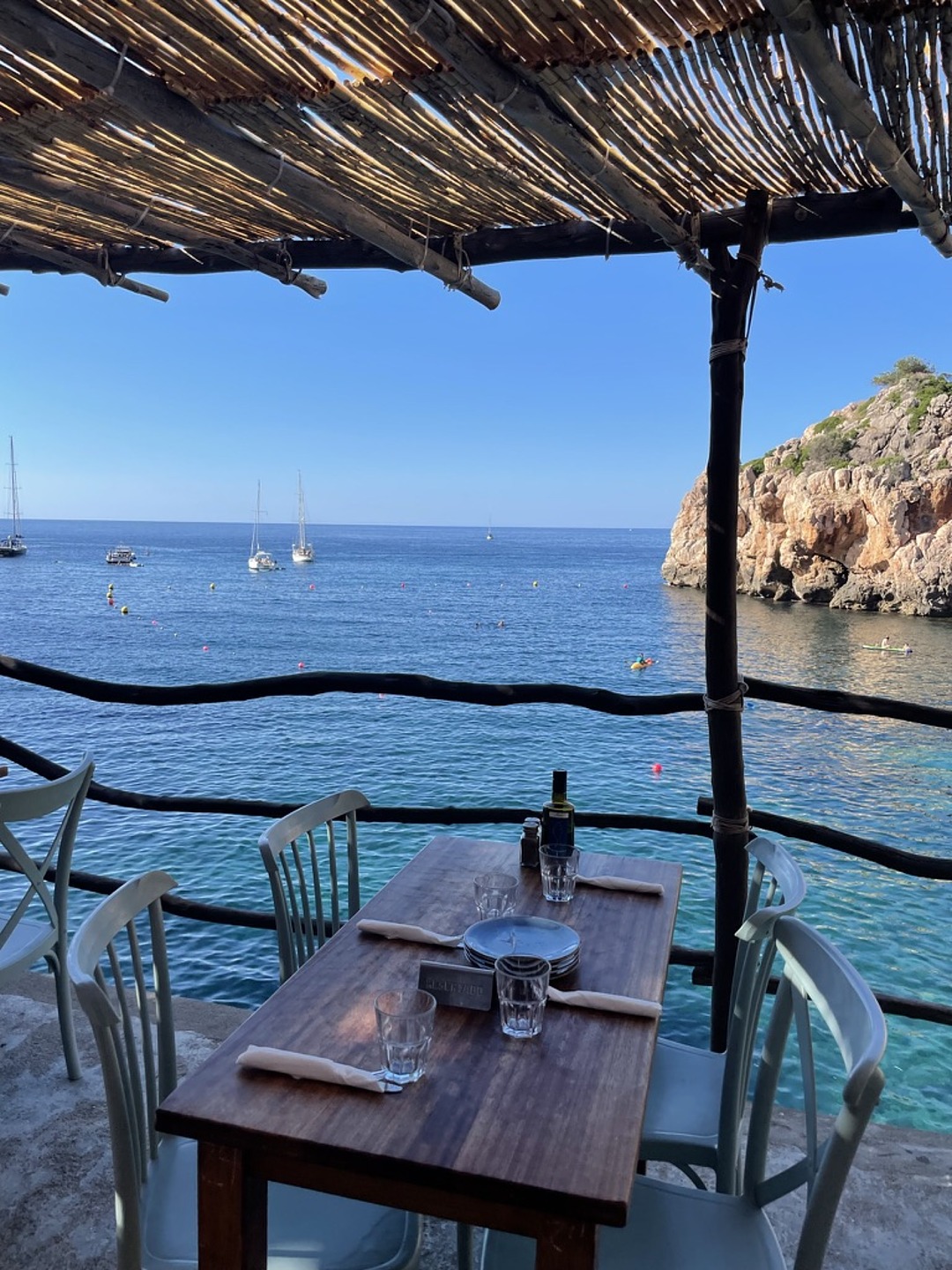
The restaurant at the bottom of the path down to Cala Deià — built right onto the rocks, tables under a bamboo canopy, the sea an arm's length away and the boats riding at anchor in the cove in front of you. The menu is fish and seafood done without complication: whatever arrived that morning, grilled or lightly dressed. The views are the thing, but the food entirely earns its place alongside them. Arrive by boat if you can; if not, the walk down from the village is part of the experience. Book well in advance.
Deià — Belmond
The hotel that defined a certain vision of Mallorca — two sixteenth-century stone manor houses set into the hillside above Deià, with olive trees growing through the terraces and the sea visible in the gaps between the mountains. The restaurant is formal and considered: long lunches on the terrace where the olive trees provide shade and the view does the rest. Even if you're not staying, lunch here is worth booking for. One of those meals that earns its setting.
Near Palma
A beach club inside a nineteenth-century military fortress built into the sea cliffs east of Palma — one of the more dramatic settings for a long lunch anywhere in the Balearics. The food is good, but the architecture is extraordinary: the old gun batteries converted into sunbeds and cabañas, the ramparts becoming terraces, the sea glittering below the walls. Reserve well ahead, arrive early to swim, and stay for the afternoon. The boat transfer from Palma makes it properly felt.
Portals Nous
An institution — and the kind that still earns its reputation. Flanigan has been the default evening destination in Portals for decades, the sort of seafront restaurant where the tables fill with people who have been coming since before they can remember. The cooking is reliably good — grilled fish, steaks, the sort of unfussy menu that lets the ingredients do the work. The terrace is the place to be on a warm evening, with the lights of the marina below and the sea doing its quiet thing in the background.
Portals Nous
A old-school hotel terrace in the best possible sense — the sort that has been serving properly cooked food with proper service and a view of the sea since long before anyone cared about Instagram. The cooking is classical Mallorcan: sobrasada croquettes, fresh fish, roast suckling pig on Sundays. The terrace is shaded, the pace unhurried, and the whole experience belongs to a version of the island that still exists here when it has largely disappeared elsewhere.
Palma — best ensaimada on the island
The oldest café in Palma — in continuous operation since 1700 — and still the finest place to eat an ensaimada. The version here is the benchmark: light as air, dusted with icing sugar, the pastry cloud-like in a way that no other bakery on the island has quite managed to replicate. Go in the morning, order one plain and one with cream, drink a very strong coffee, and accept that breakfast has been solved. The interior is a perfectly preserved piece of old Palma — tiled floors, dark wood, marble-topped tables. Worth the detour for that alone.
Mallorca has so much to see that no guide can do it justice — these are simply our very best favourites. More details, hidden spots and seasonal finds live on our Instagram.