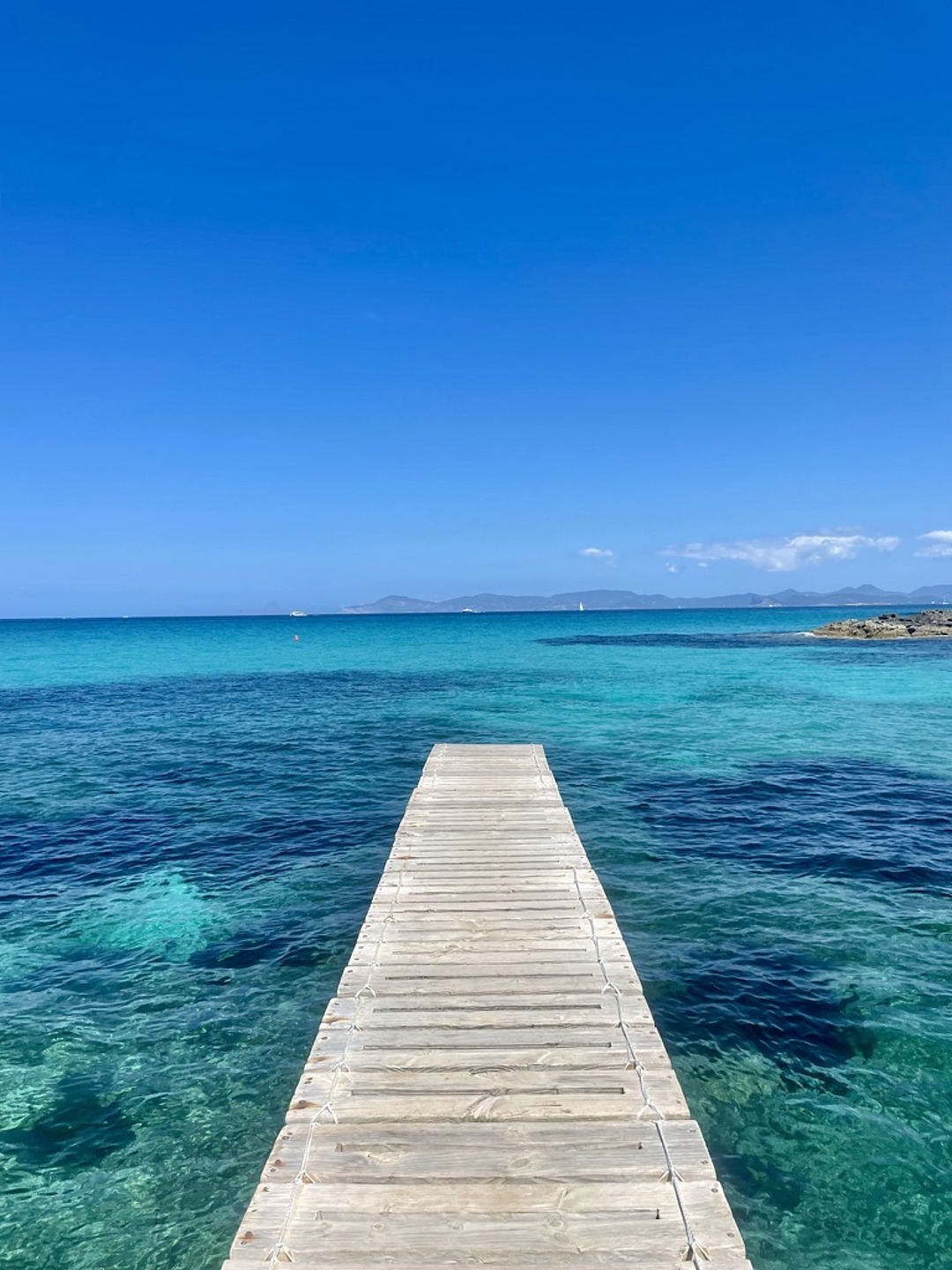
Formentera

A Slow Guide

Formentera

White sand, salt flats & the art of nothing

Formentera is the smallest inhabited Balearic, the one you have to take a boat to reach. There is no airport, no motorway, no rush. The thirty-minute ferry from Ibiza is a kind of threshold — somewhere between the harbour and the open water, the noise falls away and something shifts. By the time you step onto the dock at La Savina, you are already slower than you were.

This is an island where simplicity is the luxury. The beaches are among the most beautiful in Europe, the restaurants are unfussy, the roads are flat and quiet enough to cycle. There is very little to do here in the conventional sense, and that is precisely the point. Formentera does not compete for your attention. It simply offers a kind of stillness that, once you settle into it, feels impossible to leave.

Ses Illetes

Northern tip of the island

A narrow spit of white sand stretching into impossibly clear, shallow water — the kind of turquoise you assume has been retouched until you see it in person. Consistently ranked among Europe's best beaches, and it lives up to every word. Arrive early, claim a patch of sand, and stay until the light turns gold.

Es Caló des Mort

East coast

A tiny rocky inlet on the eastern shore, barely signposted, where traditional fishing boat shelters have been carved into the cliff face over generations. The water is glass-clear and sheltered from the wind. Barely anyone comes here, even in high season. It is the kind of place you find once and think about for years.

La Mola Lighthouse

Eastern tip of the island

At the island's far eastern edge, high on the cliffs of the La Mola plateau, the land simply ends. The lighthouse stands at the precipice, overlooking nothing but open Mediterranean. Go at sunset, when the light softens and the horizon stretches out endlessly, and you will understand why Jules Verne set a scene here. On Wednesdays and Sundays, the road up to La Mola comes alive with the island's best market — local artisans, handmade jewellery, organic honey, live music drifting between the stalls. It's the social heart of the island, unhurried and genuine, and the perfect excuse to spend an afternoon up on the plateau.

Ses Salines

Northern wetlands

The ancient salt flats that stretch between Formentera and Ibiza, shallow pools of pink and violet water shimmering in the midday heat. Flamingos wade through in season. The landscape here feels borrowed from another planet entirely — flat, mineral, almost lunar. A protected natural park and one of the most quietly extraordinary places in the Mediterranean.

Cala Saona

West coast

A west-facing cove fringed with low pines and red clay cliffs, the water a deep, shifting blue. In the late afternoon, the golden light pours in from the horizon and turns the whole scene amber. This is the best sunset swim on the island — warm water, soft sand underfoot, the sun dropping slowly into the sea ahead of you.

Can Carlos

Sant Ferran

The oldest restaurant on the island, a family-run institution serving traditional Formenteran cooking in a simple, white-walled dining room. Grilled fish, slow-cooked meats, local herbs, the kind of food that tastes like the place it comes from. The menu hasn't changed in years, because it doesn't need to.

Es Molí de Sal

Ses Illetes

A beachside restaurant at the edge of Ses Illetes, wooden tables on the sand, the Mediterranean right there at your feet. Salt-crusted fish pulled from the water that morning, cold local wine, bare feet welcome. It is exactly what eating by the sea should feel like and so rarely does.

Blue Bar

Platja de Migjorn

A legendary chiringuito on Formentera's longest beach, the kind of place that has been here long enough to have its own mythology. Sunset cocktails, simple grilled fish, music that feels right without trying too hard. Blue Bar carries the spirit of old Formentera — unhurried, unpretentious, a little bit magic in the right light.

Can Carlitos

Ses Illetes

Right on the sand at Ses Illetes, feet in the beach, the water so close you could reach it from your table. Fresh fish, simple salads, cold rosé — nothing complicated, nothing that needs to be. Can Carlitos understands that when the setting is this good, the food just needs to stay out of the way. Lunch here, with the afternoon stretching ahead of you and nowhere to be, is Formentera at its purest.

La Pesquera

Es Caló

A small harbourside restaurant in Es Caló, the kind of place where the fishermen eat. The catch comes in that morning and it's on your plate by lunch — grilled whole, dressed with olive oil and sea salt, nothing more. The terrace looks out over the little wooden boat shelters and the clear water beyond. Order the fish of the day, a glass of something local, and let the afternoon take care of itself.

Pequeña Isla

Es Pujols

A quiet courtyard restaurant tucked away in Es Pujols, candles on the tables, bougainvillea overhead. Locally caught fish prepared with care, Balearic wines poured generously, no pretension whatsoever. The kind of restaurant you return to on your second night because your first was so good you can't imagine going anywhere else.

Do

  • Rent a bike or scooter — the island is flat and small, a car feels wrong here
  • Take the early ferry from Ibiza before the day-trippers
  • Swim at Es Caló des Mort in the morning when the water is glass
  • Stay at least three nights — one or two isn't enough to decompress
  • Watch sunset from La Mola at least once

Don't

  • Come for nightlife — Formentera is not Ibiza
  • Rush between beaches — pick one and stay all day
  • Expect phone signal everywhere — some of the best spots have none
  • Leave your sunscreen at home — there's almost no shade
  • Visit only in August — June and September are quieter, cheaper and just as warm