A Slow Guide
Honey stone, slow mornings & the England that endures
There is a version of the Cotswolds that belongs to the weekend crowd — the gift shops, the queues for the bakery, the Range Rovers parked outside every pub. And then there is the version that has been here for centuries, mostly unchanged: field paths between dry-stone walls, village churches with no signal, farm shops operating on the honour system, afternoons that stretch into each other without any particular urgency.
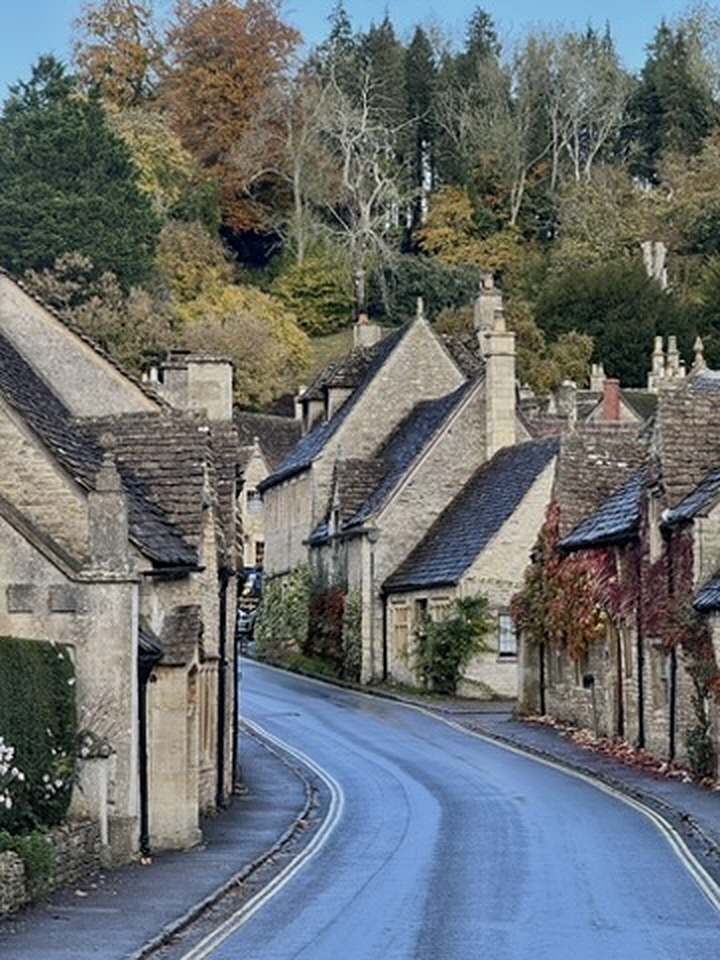
The Cotswolds rewards those who come without a checklist. The most beautiful moments here tend to arrive unexpectedly — rounding a bend on a lane too narrow for two cars, the light through October beeches, a village where nothing is designed for visitors because visitors were never quite expected. Come in autumn, come on a Tuesday, come when the honey-coloured stone is damp from rain and the hills are quiet. That is when it is at its best.
Wiltshire
Regularly cited as the prettiest village in England, and it is not an exaggeration. A single winding street of pale stone cottages, a medieval market cross, a stream running through the lower village — it is the kind of place that looks like it was set-dressed for a period film, except it has simply been here, unchanged, for several hundred years. Go early in the morning before the day-trippers arrive and you will have it almost entirely to yourself. Walk down to the weir below the village and stand there for a while.
Gloucestershire
The Venice of the Cotswolds — a gentle stretch of the River Windrush running through the centre of the village beneath a series of low stone bridges. It is busier than it deserves to be in high season, but the bones of the place are genuinely lovely, and if you arrive at the right moment, the reflections in the water and the honey-coloured buildings and the willows trailing into the current are quietly perfect.
Gloucestershire
The market town at the northern edge of the Cotswolds has one of the finest high streets in England — a long, gently curving sweep of medieval and Jacobean buildings in the full spectrum of Cotswold stone, from pale gold to warm amber. The wool trade made this town, and the architecture it left behind is extraordinary. Walk the length of it slowly, look up at the gabled rooflines, and find the wool church at the far end.
Gloucestershire
Arlington Row — the row of 17th-century weavers' cottages overlooking the water meadow — is one of the most reproduced images in English countryside photography, and it earns it. The whole village is built along the River Coln, with trout visible in the clear water and the mill buildings reflected in the surface. Walk the path through Rack Isle — the water meadow opposite Arlington Row — and take your time with it.
Everywhere
The Cotswold Way runs 102 miles from Chipping Campden to Bath, but the best walking is often not on the long-distance route at all. The network of footpaths connecting village to village across open farmland, through beech woodland and along river valleys is one of the finest things about the area. Get an OS map, leave the car, and follow whichever path takes you somewhere unexpected. That is the whole point of being here.
Fulbrook, near Burford
A proper Cotswold pub in the best sense — low ceilings, flagstone floors, a fire in the inglenook, and a kitchen that takes its ingredients seriously without making a production of it. The kind of place that has a regular crowd and earns it. Order whatever is on the specials board, find a table by the window, and settle in for the afternoon. It is exactly what you come to the Cotswolds looking for.
Selsley
On the western edge of the Cotswolds with views across the Severn Valley that on a clear day stretch to the Welsh hills. The food matches the setting — well-sourced, unhurried, genuinely good. The garden in summer is hard to leave. Go for Sunday lunch and stay as long as the afternoon allows.
Coln St Aldwyns
One of the area's most quietly accomplished village pubs — a 16th-century coaching inn in a village that barely seems to be on the way to anywhere, which is entirely the point. The rooms are good, the food is better, and the bar has the particular atmosphere of a place that has been doing this for a very long time. Stay the night if you can.
Lower Oddington
A 16th-century pub in one of the most unspoiled villages in the north Cotswolds. The Fox has the kind of atmosphere that cannot be manufactured — genuinely old, genuinely warm, with a menu that changes with what is available locally and a wine list that shows real thought. Lower Oddington itself is worth the detour: a single lane, a Norman church, fields on all sides. The Fox is the reason to linger.
Near Chipping Norton
The Daylesford farmshop and café has become something of an institution, and it deserves it. The food is as good as anywhere in the area — produce grown on the estate, everything prepared with care, the café running from breakfast through to late afternoon. It is expensive, and entirely worth it. Come for the cheese counter and leave with more than you planned to buy.
Chipping Campden
For the best scones in the Cotswolds, full stop. A small tearoom in the heart of Chipping Campden, the kind of place that does what it does perfectly and has no reason to do anything else. A pot of tea, warm scones with clotted cream and good jam, a table by the window overlooking the high street. It is a very simple pleasure and one of the best the area offers.